



For those who ask if the U.S.-Mexico sewage deal is too good to be true, it is true — and it is more than a to-do list of technical improvements. It is a statement of shared responsibility between two nations that recognizes the urgency of guaranteeing a healthy environment for communities on both sides of the border.
The Memorandum of Understanding signed on July 24 by Mexico’s secretary of Environment and Natural Resources, Alicia Bárcena Ibarra, and the administrator of the U.S. Environmental Protection Agency, Lee Zeldin, is historic — not only because it is the first environmental agreement between the current administrations, but because it reaffirms a mutual commitment to protect ecosystems, public health and quality of life in the Cali-Baja region.
This is also a matter of international relevance for Mexico, where environmental diplomacy has gained a central place in our global agenda. It also reflects an evolving awareness that a safe, clean, healthy and sustainable environment is not just a policy goal — it is a fundamental human right. Such an environment is indispensable for the enjoyment of rights as essential as life, health, food and water.
The road to this agreement was built through months of dialogue and work with local communities, state and federal representatives, and with the support of academic institutions on both sides of the border. On April 21, the Consulate General of Mexico in San Diego hosted the first meeting between the Mexican and United States delegations — an encounter marked by mutual respect and constructive dialogue, where both countries began to seek common ground to address the sewage crisis with long-term, sustainable solutions.
By that time, Mexico had already demonstrated concrete action. With a $38 million investment and in under two years of construction, the country completed the rehabilitation of the San Antonio de los Buenos treatment plant in Baja California, which now has the capacity to effectively process 800 liters of wastewater per second. This achievement highlights Mexico’s commitment to work hand in hand with the United States, not just in words but in tangible infrastructure that improves public health and environmental quality.
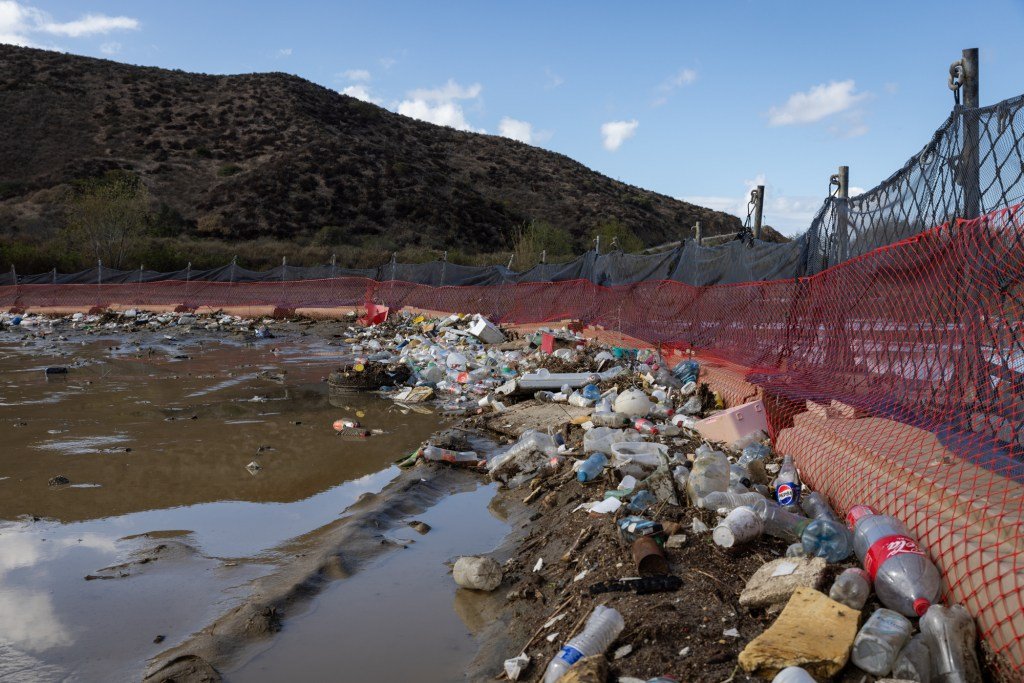
For decades, communities in Imperial Beach, Coronado and Tijuana have faced contamination from untreated wastewater along their shorelines. The new agreement, built on the commitments of International Boundary and Water Commission’s Minute 328, offers an ambitious but achievable path forward: cleaner water, fewer beach closures, healthier residents and the preservation of shared ecosystems that bind our communities together.
It is also a recognition that the future we leave for coming generations is built on the actions we take today. The rehabilitation of collectors and interceptors, the expansion of treatment plant capacities and the establishment of permanent funding for operations are not merely engineering undertakings, they are investments in public health, environmental justice and binational trust.
The progress achieved thus far is also the result of sustained, multilayered cooperation between Mexico and the United States in a wide range of areas. Over the years, both nations have built an extensive framework of collaboration that spans public safety, health, trade and environmental protection. These ties are not accidental; they have been forged through formal agreements, joint commissions and practical, on-the-ground partnerships that translate shared commitments into measurable outcomes.
This coordinated approach is essential, because environmental challenges ignore political borders. True diplomacy is measured not only in words, but in the actions that bring nations closer together and strengthen cooperation. In the case of the Tijuana River, success will be measured not by project completion and positive reports, but by the lived reality of cleaner beaches, restored ecosystems and the tangible improvement of the air, water and soil that our peoples and future generations will inherit.
This agreement shows that when Mexico and the United States work together with vision, persistence and respect, we can transform shared challenges into opportunities — and build a future where our border is not a dividing line, but a bridge of collaboration where the path brings wills together to achieve cleaner environments, healthier communities and stronger ties between our nations.
Kerber Palma is a member of the Mexican Foreign Service and consul general of Mexico in San Diego.