


Day of the Dead or Día de Muertos is a syncretic Catholic-Indigenous tradition that in the last quarter-century has transcended cultural lines and become a social observance in the U.S. Muertos-themed festivals now adorn local calendars across our region and the country, from small rural towns to major cities.
Fears of a Cinco de Mayo-fication of Day of the Dead have been aired for years now, as the observance became commercially attractive for marketers, costume-makers and food brands.
You can blame the Disney film “Coco” for the effect, or you can ride the wave, while still expressing your cherished bonds with lost loved ones with your private ofrenda at home on Nov. 1 and 2. (Here are tips on how to make your own altar, from Paola Briseño-González.)
Since I associate just about any holiday with food and drinking, for me, Día de Muertos is the perfect occasion to have some friends over for tangy, fluffy pan de muerto and a special batch of my spiced Mexican chocolate. I’ll add my usual side note here — always say “chocolate” in Spanish, even in your head: Pronounce the “e.”

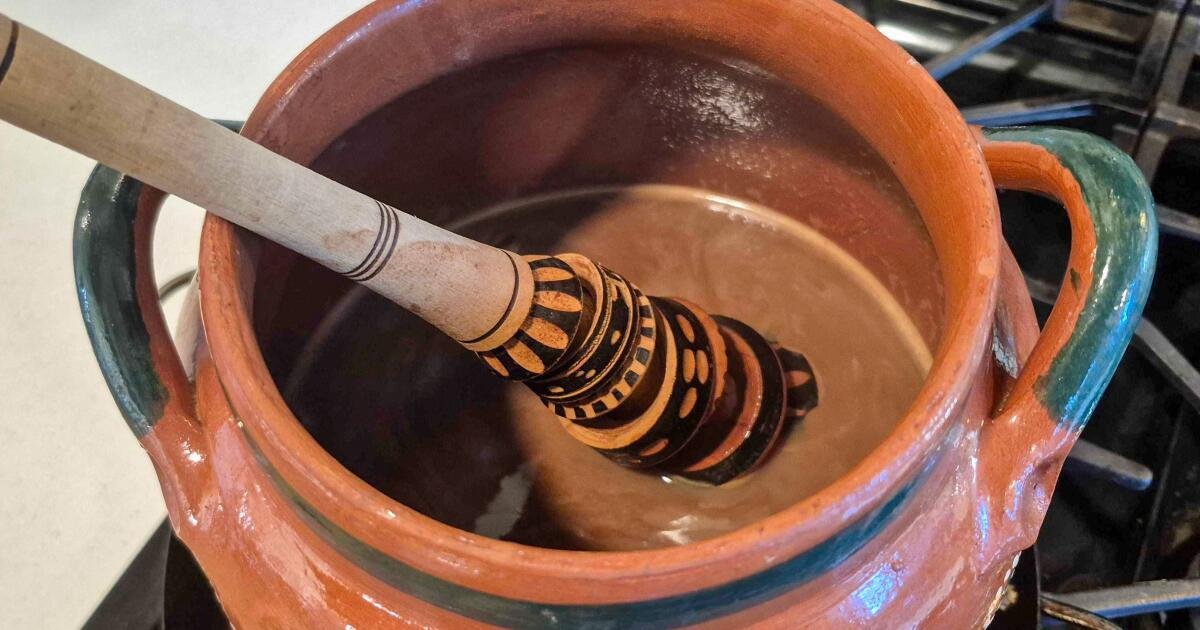
Use an olla and a molinillo for this spiced Mexican chocolate.
(Daniel Hernandez / Los Angeles Times)
Why spiced? Well, I can find almost any excuse to add a chile component to a dish or drink. n this case, I take the standard recipe of Mexican chocolate tablets and milk or water and mix in a hefty dose of cinnamon plus clove pieces.
In recent years, I’ve been contributing a note of cardamom and even a few pods of any small, round Mexican chile, like tepin or pequin. If you decide to throw in a whole pod of dried chipotle instead, dramatically increasing the heat quotient, I wouldn’t say you’ve done wrong.

A wooden molinillo is ideal for whisking Mexican chocolate. Buy one at any Latin grocery store or online.
(Daniel Hernandez / Los Angeles Times)
Whisking Mexican chocolate is essential, preferably with a traditional wooden molinillo. This frothing tool creates the ideal whiz in the final minutes of your chocolate’s simmering stage. Molinillos are sold affordably at any major Mexican grocer like Northgate or Vallarta, or can be purchased online.
For the chocolate, I recommend artisanal Oaxacan chocolate pieces, with characteristic bitterness, which are sold at almost any Oaxacan panadería or specialty store in L.A. The selection of tools and ingredients is excellent at El Oaxaqueño Imports in West Adams, for example.
The easier route is go to the Latin aisle of your grocery store or to a Mexican grocer, big or small, and look for commercial chocolate tablets like Mexican-owned Ibarra, Nestle-owned Abuelita or Carlos V. The latter name conjures memories of running to the candy store as a kid in San Diego and Tijuana and pulling together coins or pesos for that semi-bitter, granular bar that is named after Carlos V, the Holy Roman Emperor and Spanish king credited with introducing Europe to chocolate from Mexico.
The hot chocolate, like a cup of champurrado (see below), is ultimately there for dipping your piece of pan de muerto for a soppy mouthful of spice and sweetness on the special evenings of Nov. 1 and 2. Try my recipe, published below, or variations from our archives, plus a few other cozy (and boozy) drinks to bring warmth and mirth to your celebrations for the living and the dead.
Eating out this week? Sign up for Tasting Notes to get our restaurant experts’ insights and off-the-cuff takes on where they’re dining right now.

(Daniel Hernandez / Los Angeles Times)
Spiced Mexican Hot Chocolate
The etymology of chocolate is via Spanish via Nahuatl — xocóatl combines xococ for sour with atl for water, owing to the bitterness of what was once an elegant drink in the courts of ancient Mexico. Its export to Europe and the passing of centuries made “hot chocolate” a milk-derived sweet drink, though in Indigenous communities in Mexico, it’s still predominantly prepared with only water. My recipe calls for water and a half-cup of milk to give the liquid a bit of body — plus plenty of fragrant spices, and a hint of heat.
Get the recipe.
Cook time: 15 minutes. Serves 4 to 6.

Commercial chocolate brands include Nestle-owned Abuelita.
(Daniel Hernandez / Los Angeles Times)
Mexican Hot Chocolate
Lorenza Muñoz gave Times readers her Mexican hot chocolate recipe in 2011 in a feature story about the traditions of Three Kings Day. All you need are six cups of milk and two tablets of commercial chocolate. Make sure to dig up your molinillo.
Get the recipe.
Cook time: 15 minutes. Serves 4 to 6.
Christmas Ponche
Mexican-style ponche is mostly associated with Christmastime, but as far as I’m concerned, Día de Muertos is as good a time as any to get a head start on the holidays. Ponche usually calls for tejocotes, but if none are available near you, swap in extra guavas or thin slices of brown or green pears to get into that fiestas spirit. Use rum, tequila or brandy to spike the drink. The dead surely love it too.
Get the recipe.
Cook time: 45 minutes. Serves 10.
Champurrado
Combine cacao with maíz and you have champurrado, a thicker sweet drink more in the vein of atole. You’ll need fresh masa plus evaporated milk and sweet condensed milk for this recipe from Amy Scattergood.
Get the recipe.
Cook time: 40 minutes. Makes 5 quarts.
Hibiscus Margarita
If the Day of the Dead gathering is more daytime or party mode, why not make margaritas? This margarita de jamaica highlights the sharp, irresistible flavor of hibiscus flower to make a memorable margarita that pairs nicely with an afternoon of ofrenda-building.
Get the recipe.
Cook time: 10 minutes. Serves 4.