


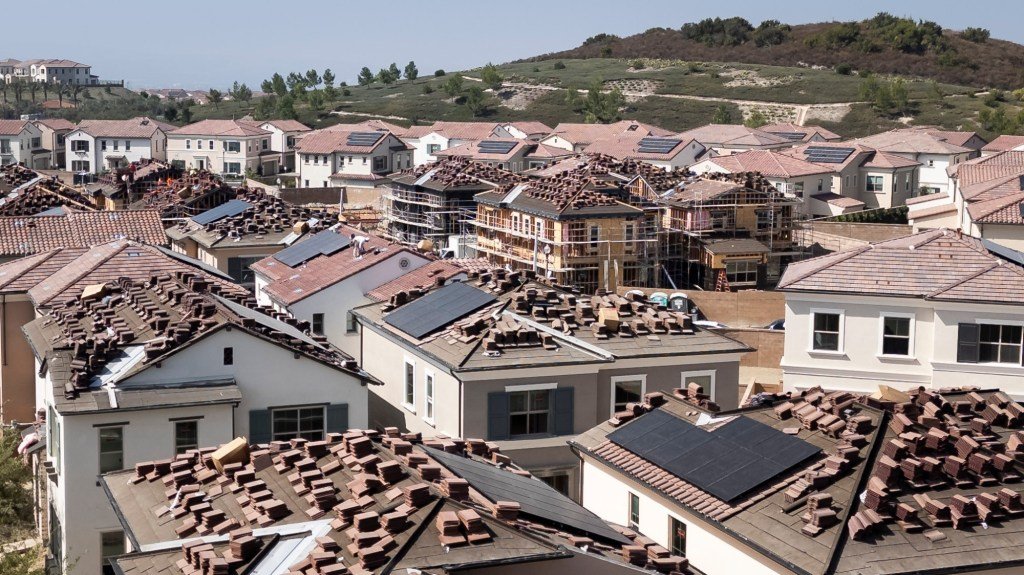

California is in the middle of a housing policy crisis that is stubbornly hard for lawmakers to solve. Families are struggling to pay rent. First-time buyers are watching prices climb out of reach. Communities across the state are losing young people who can’t afford to stay where they grew up.
Over the past several years, the California Legislature has passed important reforms designed to speed up housing production, cut red tape, and make it easier to build in the places where people want to live. But now, buried deep in one of their recent reform laws is a provision that threatens to undo much of that progress.
That new law, Assembly Bill 130, will create a new Vehicle Miles Traveled (VMT) housing tax that affects the vast majority of new housing projects in the state. Though the housing tax has been branded as “optional”, in practicality, local governments, who often look for any excuse to deny new housing, have full discretion to decide whether it applies and at what level. Noncompliance could open the door to costly CEQA lawsuits, leaving builders no choice but to pay and pass the costs along to homeowners and renters.
The costs of such a fee are staggering. According to a Caltrans-funded study, the VMT housing tax could cost $16,200 per home or apartment every year for 20 years, a total of $324,000 per unit. To put that in perspective, that’s like adding a $2 fee on every mile driven over a state-imposed VMT limit. That added cost alone is enough to make many projects financially impossible.
The impact on families will be severe. The National Association of Home Builders’ “priced-out” study shows that every $1,000 increase in the cost of a home prices nearly 9,000 California households out of the California housing market. At $324,000, this tax will put homeownership out of reach for an additional 818,000 households.
The cost of the housing tax won’t just affect homeowners; it will affect renters too. On new apartments, the tax translates to about $1,350 in additional rent every month, a 48 percent jump over the state’s median rent. For working families already struggling to make ends meet, that’s simply not sustainable.
Proponents of the tax argue it will fund affordable housing and reduce driving, but the legislation does not guarantee that the money will stay in the community where it’s collected. Instead, it can be pooled into a statewide fund with little accountability and no certainty that local residents will see a direct benefit. That means neighborhoods paying the tax could see no new housing or transportation improvements nearby.
The damage won’t stop at higher prices. Housing projects across the state are already operating on razor-thin margins due to high land costs, regulatory fees, and construction expenses due to new tariffs. Adding hundreds of thousands of dollars per unit will force many developments to be canceled entirely. That means fewer homes, fewer construction jobs, and less economic activity in the communities that need it most. The law of supply and demand is clear: if we build fewer homes, prices go up for everyone. Failing to build more homes means California’s housing policy crisis will never be solved.
AB 130 contains some important housing reforms, but those reforms mean nothing if we create a costly new tax on housing. The VMT housing tax provisions are a serious misstep that will undermine the very policies they are meant to complement. If lawmakers truly want to solve our housing policy crisis, they should repeal this provision before it causes lasting harm.
California’s future depends on getting housing policy right. That means protecting reforms that work and rejecting policies, like the VMT housing tax, that will only make our housing crisis worse.
Dan Dunmoyer is president and CEO of the California Building Industry Association.
Originally Published: