


Winning the Gatorade Player of the Year award can be a significant step in the path of many young athletes.
Players like Jayson Tatum, Cooper Flagg, Juju Watkins and Cameron Boozer are among the recent notable winners.
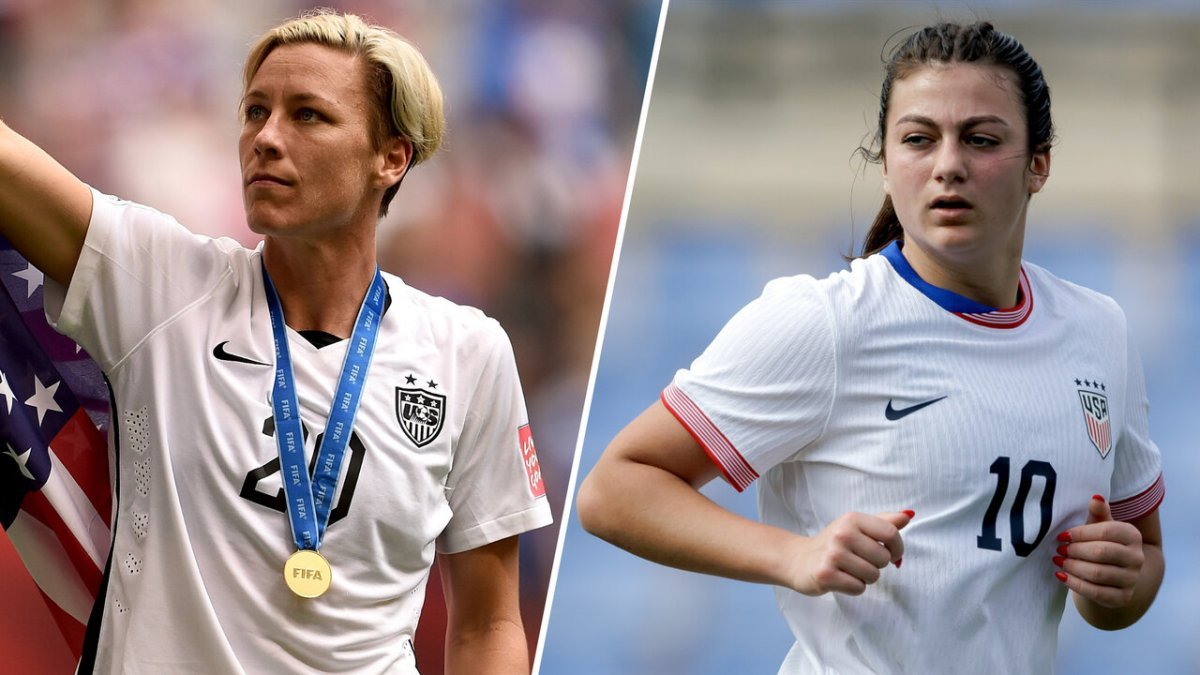
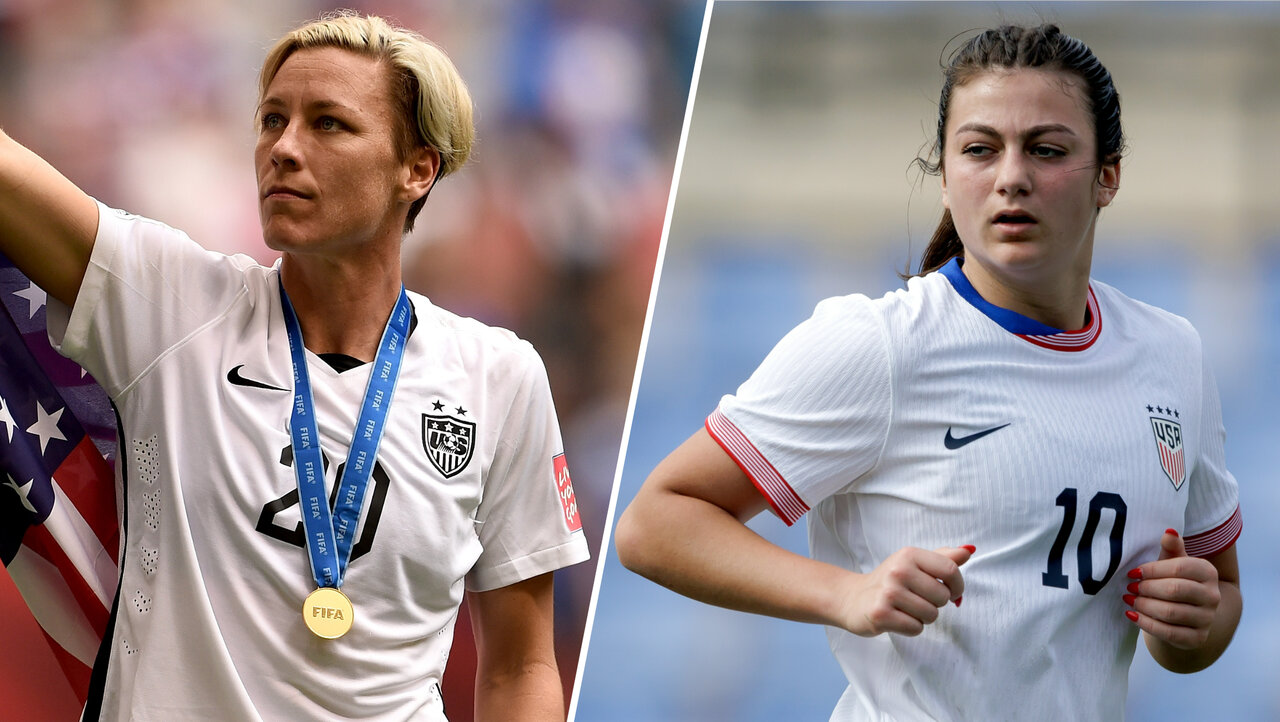
Looking to stamp her name next is women’s soccer player Addison Halpern, who is one of the recipients for 2024-25 having logged 44 goals and 14 assists this past season despite missing the first six games due to representing the U.S. women’s national team at the FIFA Under-20 Women’s World Cup.
Halpern, who played for Rutgers Prep in Rochester, N.J., finished her high school career with 180 goals — second in state history — and 68 assists as she prepares for college. Halpern is still trying to wrap her head around the achievement.
“It’s hard to even think about it, and it’s good to always take a step back and realize, like, what you’re actually accomplishing,” Halpern told NBCUniversal Local. “And I think we often look over that, and I’ve recently had some time to reflect on it. And it’s just, it’s insane to even think about that. To even get the state one was an honor, and then I couldn’t even think that wasn’t even on my radar to get the national one.”
Where will Halpern take her game next? She’s set to be a Cavalier at the University of Virginia, where she’s maintaining high aspirations.
“The goal is national championship at Virginia, obviously,” Halpern said. “But just taking it one game at a time and just making sure I’m developing while I’m there and and just having a good time and enjoying it while I can.”
As part of winning the award, Gatorade invited Halpern and family to Los Angeles for a week-long experience leading up the ESPYs. Lisa Leslie, Karl-Anthony Towns and April Ross were among some of the stars in attendance.
The list also included USWNT legend Abby Wambach, a Gatorade state winner who sat with Halpern and praised the New Jersey native for her goalscoring traits and achievements.
If there’s anyone who knows about scoring goals at high rates, it’s Wambach. The 5-foot-11 forward scored 184 goals in 255 caps, currently the second most of all time in women’s international soccer. As young forwards like Halpern and more seek to grow their game, Wambach offered deep insight beyond just the tactical aspect of the sport.
“I think there’s a thing that I’ve been thinking a lot about recently,” Wambach started. “My daughter also plays, and she she scores goals, too. One of the things that I think is happening a lot in the younger generation is it’s like this dual perspective. Meaning, oftentimes, some of the kids are worrying too much about what it looks like rather than the actual reality of the goal and the matter of the fact that as forwards, our job is to score goals. And vulnerability is a difficult thing for a Gen Z, Gen Alpha age person. You know, they ‘LOL’ everything. Like, so that’s so funny. Right? And I think that there’s a desire to not be as vulnerable. And in order to score goals at the highest level at a consistent rate, you have to literally open yourself up to the most kinds of vulnerability there is.
“So, putting yourself out there and, like, planting a flag in the ground every single time you enter the field, that says I care more than everybody else. Because the way that that motivates you to run around, the way that that motivates you to lead your team, the way that that motivates you to score the goals, just based on saying it out loud, like, that’s what competition is, and it’s not necessarily against anybody else.
“It’s like you wanna go out there and score. And if you don’t score, then you’ve had a bad day. And the end of the game, at the end of the season, at the end of practice, that is the thing that I want these players to remember. That it’s like, the more you can open yourself up to utter annihilation, to me, the more goals you’re gonna score.”
Young players have also been at the focal point of the USWNT with the arrival of head coach Emma Hayes. Hayes built a dominant team in England with Chelsea, and has brought over her expertise and success overseas.
Wambach offered insight as to how Hayes is building her ideal World Cup team and beyond with a blend of ready-now youth and accomplished veterans.
“Every cycle leading into the World Cup, you’ve got then the Olympics the following summer, the coaching staff has to really get their core group of players together,” Wambach started. “And right now, in the last couple of months, since the Olympics, Emma has had an opportunity to see younger players who potentially could be a part of that core team. So some of the veteran players, you know, we’ve got players out, pregnancy leave, and some injuries, the ‘Triple Espresso’ [Trinity Rodman, Mallory Swanson and Sophia Wilson], specifically. It’s a unique opportunity for some of these other players to step in to grow themselves in the highest level of environment, of competition and difficulty.
“So to me, Emma…she’s sitting pretty. Right? Like, she came in, she had no expectations in the Olympics. They win gold. Incredible. Now the expectations get reset, and they’re quite high. Right? And I think that they will always be high. That’s the nature of the position of the national team head coach. And I’m just excited to see what happens because a lot can happen over the next 24 months leading into the women’s World Cup in ’27.”
Wambach also pointed out that there could be more players in both the NWSL and foreign leagues who are currently not in the picture that eventually breakthrough in time for the quadrennial tournament in Brazil.
Not only is the USWNT different now compared to when Wambach retired in 2015, the sport itself has undergone significant changes since the Rochester, N.Y., native hung up the cleats. So much so that Wambach is uncertain how she would have fit in her prime.
“It feels like the game is a totally different game,” Wambach said. “It feels like they used to just bang the ball up to me, and I would head it to Alex [Morgan]. And then she would run really fast and then bring it back in the middle, and I would score. Like, that was our game plan, it feels like. And, of course, we we were much more sophisticated, but we definitely played more direct.
“And nowadays, it’s definitely more of a tactical, and a technical exploration, you know, going in and out of different formations depending on who’s on the field and what their strengths are. And so it’s a lot more fun in some ways to watch, and sometimes I think we get a little too cute with it. I really want more goals, I like to score more goals. That just will always be the case for me. But…I don’t know if I would even make the team nowadays.”
Hayes became the 10th full-time head coach for the U.S. Women’s National Team after leading the Chelsea FC Women for the last 11 seasons.